
Blog
What Is the Mool Mantar? Meaning, Words and How Sikhs Display It
Oct
The Mool Mantar is the opening verse of the Guru Granth Sahib, composed by Guru Nanak. It begins with Ik Onkar and sums up core Sikh beliefs about one God. Many Sikh families display it in the home as a daily reminder of those beliefs. This guide explains what it says, what each word means and how families display it respectfully.
What Does “Mool Mantar” Mean?
“Mool” means root or basic, and “mantar” means a sacred verse or formula. The Mool Mantar is the root statement of Sikh belief about God. It appears at the very beginning of the Guru Granth Sahib, before Japji Sahib, which is the first prayer in the Sikh morning prayers. It also appears at the start of many sections of the scripture, in full or in a shortened form.
The Mool Mantar in Gurmukhi and Transliteration
Gurmukhi:
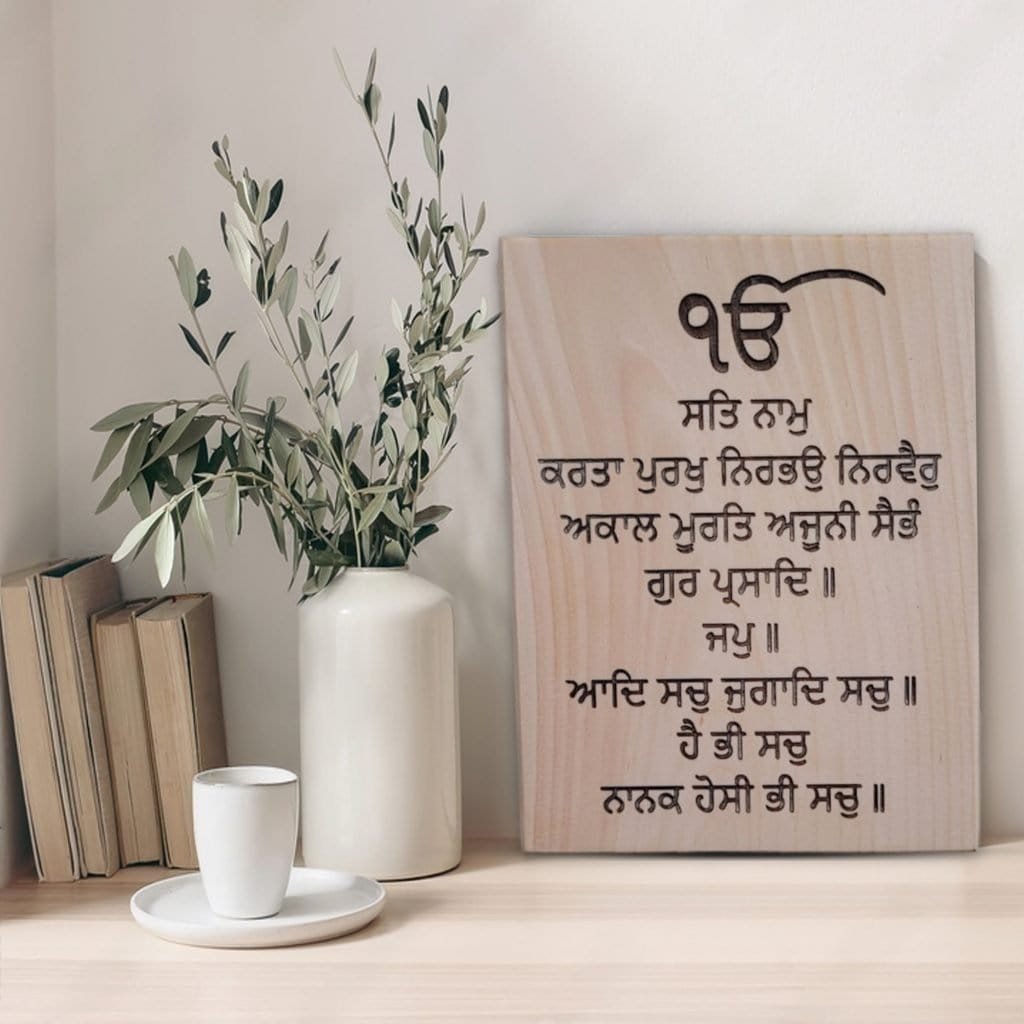
ੴ ਸਤਿ ਨਾਮੁ ਕਰਤਾ ਪੁਰਖੁ ਨਿਰਭਉ ਨਿਰਵੈਰੁ ਅਕਾਲ ਮੂਰਤਿ ਅਜੂਨੀ ਸੈਭੰ ਗੁਰ ਪ੍ਰਸਾਦਿ ॥
Transliteration:
Ik Onkar Sat Naam Karta Purakh Nirbhau Nirvair Akaal Moorat Ajooni Saibhang Gur Prasaad.
Spellings of the transliteration vary between sources. Sikh tradition and scholars also differ on where the Mool Mantar ends: many stop at “Gur Prasaad”, while others include the line that follows it (“Jap. Aad Sach Jugaad Sach. Hai Bhee Sach Nanak Hosee Bhee Sach”).
Meaning of Each Word
| Word | Meaning |
|---|---|
| Ik Onkar | There is one universal Creator |
| Sat Naam | Truth is the Name |
| Karta Purakh | The Creator, present in everything |
| Nirbhau | Without fear |
| Nirvair | Without hatred or enmity |
| Akaal Moorat | Timeless form, beyond death |
| Ajooni | Beyond birth and rebirth |
| Saibhang | Self-existent |
| Gur Prasaad | Realised by the Guru’s grace |
The Mool Mantar in English
Translations differ slightly, but a common rendering is: There is one Creator. Truth is His Name. He is the Creator, without fear and without hatred, timeless in form, beyond birth and death, self-existent, and known by the Guru’s grace.
What Is Ik Onkar?
Ik Onkar is the opening symbol of the Mool Mantar and one of the best-known Sikh symbols. It expresses the belief in one God for all people. Many families display it on its own in the home.
Why Do Sikh Families Display the Mool Mantar at Home?
Families display the Mool Mantar to keep the core message of their faith visible in daily life. It is a popular gift for housewarmings, weddings and other family occasions. Many people place it in a living room, entryway or prayer space.
Displaying the Mool Mantar Respectfully
Choose a clean, honoured place such as a living room, entryway or prayer space, hung at a respectful height. Avoid places where the text could be treated casually. If you are unsure, ask your family elders or your local gurdwara.
Mool Mantar Wooden Wall Art
At Wood Art Gallery, we handcraft the Mool Mantar in Punjabi on wood in our Brampton, Ontario workshop. Choose between two styles:
- Laser-engraved Mool Mantar wall art with the text engraved into the wood
- 3D wooden Mool Mantar wall art with raised, laser-cut Gurmukhi letters
Both ship across Canada and the USA. Browse all our Sikh and Punjabi decor.
Frequently Asked Questions
Who wrote the Mool Mantar?
Guru Nanak, the first Sikh Guru, composed it. It appears at the start of the Guru Granth Sahib.
What is the Mool Mantar in Punjabi?
It is written in Gurmukhi script, shown above. It begins with ੴ (Ik Onkar).
How many words are in the Mool Mantar?
The commonly recited form has around a dozen words, depending on where you count it as ending. See the note on the ending above.
Is the Mool Mantar a prayer?
It is a statement of belief and a core part of Sikh prayer. Many Sikhs recite it as part of their daily prayers.
Can I order the Mool Mantar in a different language or style?
Our wall art shows the Mool Mantar in Punjabi (Gurmukhi). Call us at (289) 499-2822 if you have a question about an order.
